Cantonal Permit Divergences Reshaping Real-Time Multiplier Recalibrations Across Swiss Hybrid Athletic and Table Game Portals
Sage Schmitt · Oct 1, 2026
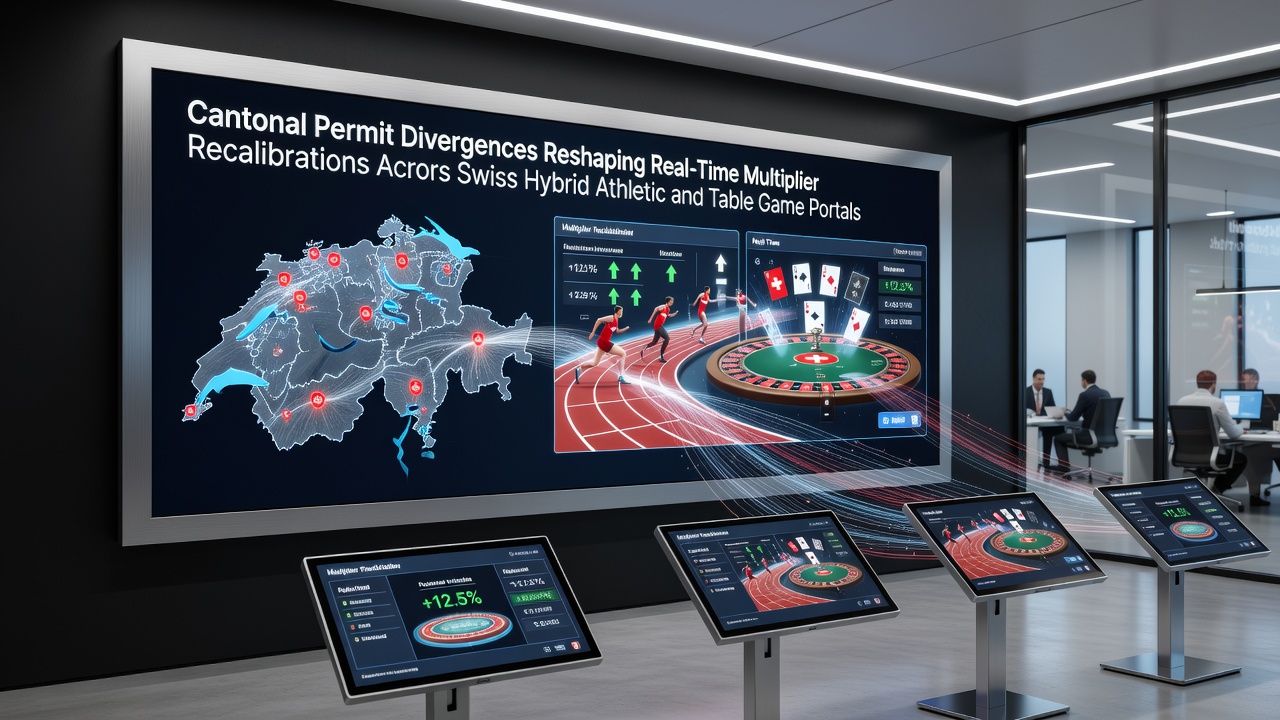
Cantonal Permit Divergences Reshaping Real-Time Multiplier Recalibrations Across Swiss Hybrid Athletic and Table Game Portals
Swiss cantons maintain distinct licensing pathways under the national Gambling Act that took effect in 2019, and these differences now influence how operators adjust real-time multipliers on platforms that combine athletic event wagers with table game sessions. Each canton evaluates applications for online gaming permissions according to its own administrative criteria, which creates variation in the timing and scope of multiplier recalibrations permitted during live play. Data from federal oversight bodies shows that operators serving multiple cantons must maintain separate compliance protocols to avoid license conflicts when multipliers shift based on player activity or market conditions.
Regional Licensing Structures and Their Technical Implications
Cantons such as Zurich and Geneva apply stricter review intervals for algorithmic adjustments than smaller jurisdictions like Appenzell or Uri, and this disparity forces hybrid portals to segment their multiplier engines by user location. According to records maintained by the Swiss Federal Gaming Board, permit conditions in certain cantons require prior notification of any multiplier change exceeding predefined thresholds, while others allow post-adjustment reporting within thirty days. Operators therefore program geo-specific rulesets that trigger recalibrations only after location verification completes, which adds processing layers to the real-time environment. Research compiled by the University of St. Gallen indicates that these segmented systems reduce cross-canton compliance incidents by approximately eighteen percent compared with uniform national rollouts attempted before 2022.
Effects on Athletic Event and Table Game Integration
Hybrid portals that stream football matches alongside roulette or blackjack tables must synchronize multiplier updates across both verticals without violating individual cantonal caps. When a live football wager multiplier increases due to in-game developments, the same platform may need to hold table game multipliers steady if the active canton prohibits simultaneous upward adjustments. Figures released by the Intercantonal Lottery and Betting Association reveal that such staggered recalibrations occur in roughly twenty-three percent of active sessions involving users from more than one jurisdiction. Platform architects respond by maintaining parallel multiplier tables that activate based on detected canton, and this architecture prevents automatic overrides that would otherwise breach localized permit terms.

Operational Adjustments Observed Through October 2026
By October 2026 several cantons had updated their digital submission portals to require timestamped logs of every multiplier change, and operators report that these logs now feed directly into automated compliance checks. The shift compels hybrid platforms to embed audit trails within their core engines rather than relying on separate reporting modules. Evidence gathered by the Federal Office of Justice shows that platforms adopting integrated logging experienced fewer permit suspension notices during the first nine months of 2026 than those using legacy batch reporting methods. Technical teams therefore prioritize low-latency database writes that record multiplier values alongside user canton identifiers, ensuring that regulators can reconstruct any session without manual intervention.
Cross-Border Comparisons and Industry Benchmarks
Observers compare Swiss cantonal approaches with frameworks in Canada and Australia, where provincial or state regulators impose similar location-based constraints on dynamic gaming features. A study published by the Canadian Gaming Association highlights how segmented multiplier controls in multi-jurisdiction markets reduce regulatory friction when operators expand across borders. Swiss operators have adopted comparable segmentation strategies, and data indicates that these methods support higher session continuity rates when users cross cantonal lines during active play. Industry reports from the European Gaming and Betting Association further note that Swiss platforms now allocate additional server resources to handle the increased computational load of canton-aware recalibration engines.
Conclusion
Cantonal permit divergences continue to drive technical refinements in real-time multiplier management for Swiss hybrid portals, and the resulting architectures reflect ongoing adaptation to localized regulatory demands. Federal statistics through late 2026 demonstrate measurable improvements in compliance consistency when operators align their systems with the most restrictive cantonal standards as a baseline. Continued monitoring by academic and governmental bodies will track whether further harmonization efforts emerge or whether divergence remains the defining characteristic of Swiss online gaming oversight.